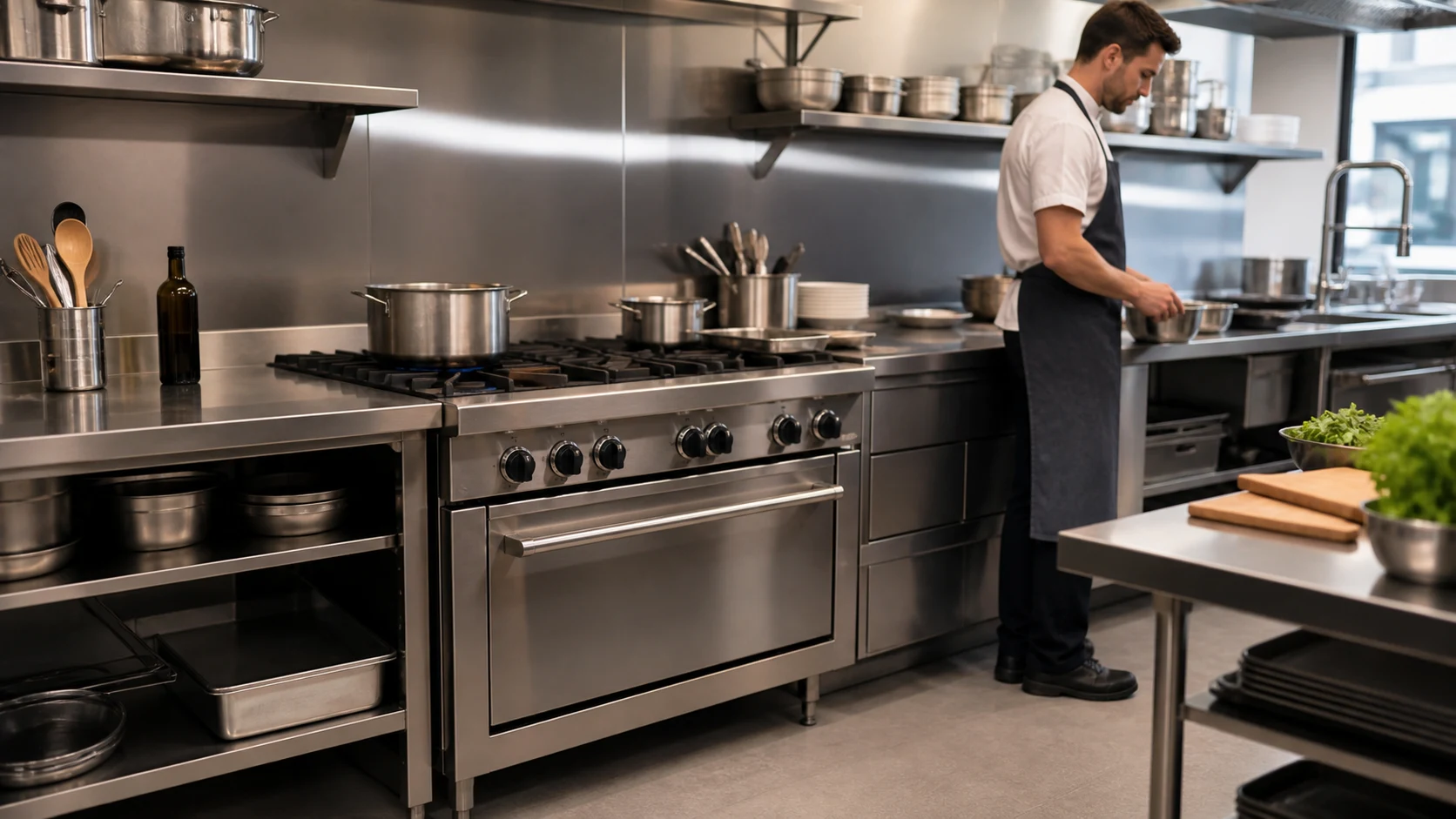
Commercial Oven Range Guide: Choosing the Best Cooktop with Oven for Australian Kitchens

Commercial Oven Range Guide: Expert Tips on Selecting the Perfect Cooktop with Oven in Australia
In the competitive Australian hospitality landscape, selecting the right commercial oven range isn’t just a choice—it’s crucial for your kitchen’s operational success. Whether you’re managing an acclaimed restaurant in Sydney’s CBD, a bustling café in Melbourne’s famous laneways, or a boutique catering business in Brisbane, your choice of cooktop with oven directly influences efficiency, cost-control, food quality, and customer satisfaction.
Why Australian Commercial Kitchens Depend on Integrated Oven Ranges
From precisely grilling steaks to perfectly baking pastries, integrated cooktop and oven ranges streamline workflows, optimise limited space, and significantly reduce energy costs. Designed specifically for heavy-duty commercial environments, these appliances ensure consistent quality, even under peak-hour pressure, allowing chefs to focus more on creativity and less on equipment limitations.
Key Advantages of Commercial Cooktops with Integrated Ovens:
- Space Optimisation: Compact, integrated units free up valuable kitchen space.
- Improved Workflow: Simultaneously cook multiple dishes without compromising precision.
- Cost-Effective Energy Use: Efficient designs reduce energy bills and environmental footprint.
- Consistent Culinary Results: Precise temperature control ensures dishes are consistently cooked to perfection.
- Australian conditions: Equipment suited to Australian commercial-kitchen safety and food-safety expectations.
What is a Commercial Cooktop with Oven?
A commercial cooktop with oven—often called a commercial oven range—is a professional-grade kitchen appliance that integrates a stovetop cooking surface with an oven beneath, designed specifically for high-demand foodservice environments. Widely used across Australian restaurants, cafés, catering businesses, and hospitality venues, these units offer chefs powerful, flexible cooking capabilities within a compact, efficient footprint.
Core Functions and Design Features
Commercial cooktops with ovens typically feature multiple robust burners or hotplates on the cooktop, combined with one or two ovens beneath. They are engineered for continuous, intensive use, enabling simultaneous cooking methods—such as boiling, frying, sautéing, grilling, roasting, and baking—all within a single, space-saving unit.
- Multiple Burners: Designed to accommodate large pots, pans, and heavy-duty cooking utensils.
- Powerful Oven Capacity: Larger and more powerful ovens suited to bulk food production, accommodating standard full-size gastronorm pans commonly used in Australian kitchens.
- Durable Construction: Typically built from heavy-gauge stainless steel to withstand constant use and rigorous cleaning.
- Safety Features: Commercially certified with features such as flame-failure devices, precise thermostat controls, and reinforced heat-resistant handles, compliant with Australian safety standards.
Commercial Cooktops vs Domestic Cooktop and Oven Units
While domestic cooktops with ovens are designed for occasional home use, commercial oven ranges are rigorously constructed to meet the demanding daily operations of professional kitchens. Here’s a clear comparison to highlight their key differences:
| Characteristic | Commercial Cooktop with Oven | Domestic Cooktop and Oven |
|---|---|---|
| Durability & Build Quality | Heavy-duty stainless steel construction; designed for intensive daily use | Lighter construction, suitable for home cooking; less resistant to heavy use |
| Cooking Capacity | High-capacity ovens (often 6-10 trays); multiple burners/hotplates for simultaneous cooking | Smaller oven capacities; fewer burners typically suited to family-sized meals |
| Energy Efficiency | Engineered for high-volume, continuous use with efficient energy management | Less energy-efficient under commercial conditions; designed for lower-frequency home use |
| Safety and Compliance | Built to rigorous Australian commercial safety standards; certified flame-failure protection | General home-use safety features; not typically certified for commercial environments |
| Maintenance Requirements | Regular professional maintenance and inspections recommended | Basic cleaning and minimal professional maintenance required |
Clearly, investing in a dedicated commercial cooktop with oven is essential for Australian foodservice operators aiming for efficiency, reliability, and compliance in their culinary operations.
Why Invest in a Commercial Cooktop with Oven for Your Australian Kitchen?
Choosing the right commercial cooking equipment can dramatically influence your kitchen’s performance, profitability, and compliance. A commercial cooktop with integrated oven is not just a piece of cooking gear—it’s a strategic investment. Here are several compelling reasons why Australian hospitality businesses increasingly opt for integrated oven ranges:
1. Superior Space Utilisation and Cost Efficiency
In busy Australian cities such as Melbourne, Sydney, and Brisbane, kitchen space comes at a premium. Integrating your cooktop and oven into a single appliance maximises your available workspace, eliminating the need for separate appliances and costly kitchen expansions. This streamlined approach reduces installation expenses, maintenance costs, and simplifies kitchen layouts significantly.
2. Enhanced Productivity and Cooking Efficiency
Commercial oven ranges allow chefs to seamlessly multitask. For instance, you can simultaneously bake dishes in the oven below while sautéing or grilling items on the stovetop above. This multitasking capability dramatically reduces cooking times, allowing you to serve customers faster, enhance workflow efficiency, and ultimately boost your daily productivity and turnover rates.
3. Optimised Energy Usage and Lower Operational Costs
Energy efficiency is a critical consideration for Australian businesses due to rising electricity and gas costs. Commercial oven ranges are specifically engineered for energy-efficient performance, delivering rapid, uniform heating and precise temperature control. Using a single, integrated appliance typically reduces energy consumption compared to multiple standalone units, translating directly into lower monthly operational costs and significant long-term savings.
Compared with running several separate appliances, an integrated oven range typically lowers both energy and maintenance outlay — though the actual saving depends on your equipment, energy tariffs, and service volume.
4. Food Safety and Energy Efficiency
Australian commercial kitchens operate under food-safety and workplace-safety obligations, and buyers increasingly weigh energy efficiency too. Choosing well-built, well-rated equipment suited to Australian conditions supports smoother inspections, reliable day-to-day operation, and your wider sustainability goals.
Important Compliance Considerations:
- Flame-failure safety devices on gas models, mandated by Australian safety codes.
- Energy ratings and efficiency certifications that help kitchens meet sustainability targets.
- Easy-to-clean designs that facilitate adherence to hygiene standards.
Ultimately, investing in a high-quality commercial cooktop with integrated oven is one of the most impactful decisions Australian kitchen operators can make, enhancing efficiency, profitability, and regulatory compliance in a highly competitive foodservice industry.
Types of Commercial Cooktops with Ovens for Australian Kitchens
Selecting the right commercial oven range involves understanding your kitchen’s specific cooking requirements and operational needs. In Australia, there are primarily three types of commercial cooktops with integrated ovens: Gas, Electric, and Dual Fuel. Each type offers unique benefits tailored to different culinary methods, kitchen setups, and energy preferences.
1. Gas Cooktops with Ovens: Power and Speed
Gas cooktops with ovens are ideal for Australian commercial kitchens requiring rapid heat response, high-temperature cooking, and flexibility. Favoured by chefs for their immediate heat control, these models are particularly suited to kitchens frequently using techniques such as stir-frying, sautéing, or grilling. Gas-powered ovens also provide consistent heat and quick recovery times, essential for busy restaurants and high-turnover venues.
- Best Suited For: High-volume, fast-paced restaurants, Asian cuisines, grill-centric menus.
- Advantages: Rapid heating, immediate temperature control, typically lower running costs due to Australia’s gas pricing.
2. Electric Cooktops with Ovens: Precision and Efficiency
Electric cooktops with ovens offer unparalleled precision and consistent temperature control, making them a top choice for bakeries, pastry kitchens, and establishments focused on meticulous culinary standards. With precise thermostatic control, electric ovens provide even heat distribution, significantly reducing the risk of uneven cooking or baking.
- Best Suited For: Bakeries, pastry shops, cafés serving baked goods, kitchens prioritising energy efficiency.
- Advantages: Accurate temperature regulation, uniform heating, superior energy efficiency.
3. Dual Fuel Cooktops with Ovens: The Best of Both Worlds
Dual fuel models integrate a gas cooktop with an electric oven, combining the powerful, responsive cooking of gas burners with the precise temperature control of electric ovens. Popular among high-end restaurants, these units enable chefs to utilise the unique strengths of both energy sources, offering unmatched versatility and efficiency.
- Best Suited For: Fine dining venues, versatile kitchens requiring multiple cooking techniques, caterers managing diverse menus.
- Advantages: Versatile cooking capabilities, optimal energy management, precise oven baking combined with responsive gas burners.
Comparison Table: Gas vs Electric vs Dual Fuel Oven Ranges
| Feature | Gas Cooktop with Oven | Electric Cooktop with Oven | Dual Fuel Cooktop with Oven |
|---|---|---|---|
| Heat Responsiveness | High (Immediate) | Moderate | High (cooktop), Moderate (oven) |
| Temperature Precision | Good | Excellent | Excellent (oven), Good (cooktop) |
| Energy Efficiency | Moderate | High | High (balanced efficiency) |
| Running Costs in Australia | Typically lower due to gas prices | Higher, but efficient in long-term | Balanced; optimal energy management |
| Typical Kitchen Usage | Fast-paced, high-turnover kitchens | Bakeries, precision-focused kitchens | Versatile, high-end culinary operations |
Understanding these differences helps Australian hospitality businesses select the perfect cooktop with oven, ensuring maximum performance, efficiency, and culinary excellence tailored to their operational needs.
How to Choose the Right Commercial Cooktop with Oven for Your Australian Kitchen
Selecting the ideal commercial oven range involves careful consideration of your kitchen’s unique size, menu style, operational demands, and energy preferences. With Australia’s diverse hospitality landscape—from bustling cafés in Sydney to fine dining restaurants in Melbourne—understanding how these factors influence your choice ensures you invest wisely and maximise long-term efficiency and profitability.
1. Assess Your Kitchen Size and Menu Style
The physical layout of your kitchen and the dishes you regularly prepare significantly influence your choice of commercial oven range. For compact kitchens in urban cafés, smaller integrated units with fewer burners and moderate oven capacity may be ideal. Conversely, larger venues such as hotels or catering businesses typically benefit from robust, high-capacity oven ranges designed for high-volume production.
- Compact Kitchens: Opt for units with 4-6 burners and moderate oven sizes.
- Large Kitchens and Catering Businesses: Select larger ranges with 8-10 burners and dual ovens.
- Culinary Specialisation: Kitchens focused on baked goods require precise electric ovens, while those preparing diverse menus might prefer dual fuel ranges.
2. Consider Daily Production Volume and Cooking Demand
Analyse your daily meal service volume to ensure your cooktop with oven comfortably meets peak operational demands. Carefully evaluate:
- Number of Daily Meals Served: Higher volumes require more burners and larger oven capacities to maintain efficient workflow.
- Peak Service Times: If your kitchen experiences intense rush periods, choose powerful units with faster heating and recovery times, like commercial-grade gas or dual-fuel ranges.
3. Selecting the Right Size and Oven Capacity
Choosing appropriate equipment dimensions is crucial. Consider both your immediate needs and potential future growth. Below is a practical reference guide based on typical Australian hospitality scenarios:
| Kitchen Scenario | Recommended Burner Configuration | Oven Capacity |
|---|---|---|
| Cafés / Small Bistros (50-100 covers/day) | 4-6 burners | Single Oven, medium capacity (4-6 trays) |
| Restaurants / Medium-sized Kitchens (100-200 covers/day) | 6-8 burners | Single or Double Oven, larger capacity (6-8 trays) |
| Hotels / Catering Companies (200+ covers/day) | 8-10 burners | Double Oven, large capacity (8-10 trays per oven) |
4. Energy Efficiency Ratings and Operating Costs
Energy efficiency directly impacts operational costs. In Australia, commercial kitchens are encouraged to select appliances with high energy star ratings or energy-efficient certifications to reduce utility expenses and environmental impact:
- Gas Models: Often lower ongoing costs due to Australia’s favourable gas rates.
- Electric Models: Higher efficiency, precise temperature control, ideal for consistent baking and controlled cooking environments.
- Dual Fuel: Balances energy costs effectively, combining the advantages of both gas burners and electric ovens.
Running costs vary by fuel type and how hard the line runs: gas suits fast, high-heat service, electric offers precise and consistent heat, and dual-fuel combines both. Confirm expected consumption against each model’s rated input and your own tariffs rather than a headline figure.
Carefully assessing these factors ensures you select a commercial cooktop with oven tailored perfectly to your operational demands, budget, and long-term growth plans within the competitive Australian hospitality market.
Key Features to Consider When Choosing a Commercial Cooktop with Oven
Selecting a high-quality commercial oven range for your Australian kitchen goes beyond simply choosing the right size or fuel type. Understanding critical features ensures you pick equipment that not only meets your culinary requirements but also enhances your operational efficiency, safety, and compliance with Australian standards.
1. Number of Burners and Oven Capacity
The number of burners and oven size directly influence your kitchen’s productivity. Carefully match burner quantity and oven capacity to your daily cooking volume:
- 4-6 Burners: Suitable for small cafés and low-to-medium output restaurants.
- 6-8 Burners: Ideal for medium-sized establishments requiring versatility.
- 8-10 Burners with Double Ovens: Essential for large-scale operations, high-volume restaurants, hotels, and catering businesses.
2. Cooking Flexibility (Temperature Zones and Timers)
Consider equipment that provides precise temperature zones and timing controls. Multi-zone cooktops allow simultaneous cooking at different temperatures—critical for preparing diverse dishes efficiently. Integrated timers and programmable ovens enhance consistency, reduce waste, and improve overall workflow.
- Independent Burner Controls: Enables chefs to cook multiple dishes simultaneously at precise temperatures.
- Programmable Oven Controls: Ensures accurate baking and roasting, crucial for menu consistency.
- Integrated Timers: Reduce monitoring needs and minimise risk of food spoilage or overcooking.
3. Structural Materials and Ease of Cleaning
Durability and hygiene are paramount in Australian commercial kitchens. High-quality stainless steel construction ensures durability, resistance to corrosion, and ease of maintenance, crucial for meeting local hygiene regulations:
- Heavy-Duty Stainless Steel: Offers robustness, longevity, and ease of sanitation.
- Removable Components: Features such as removable drip trays and burner grates simplify cleaning and maintain hygiene.
- Smooth Surfaces: Easy-to-clean oven interiors minimise contamination risks and streamline routine maintenance.
4. Safety Features (Flame-Failure Protection and Temperature Controls)
Australian safety standards demand rigorous compliance. Ensure your chosen commercial oven range includes critical safety features to protect your staff and property:
- Flame-Failure Protection: Automatically shuts off gas supply if the flame goes out, preventing gas leaks and accidents.
- Temperature Safety Controls: Built-in thermostats and temperature limiters prevent overheating, maintaining safe operational conditions.
- Heat-Resistant Handles and Doors: Reduce burn risks, ensuring safe and comfortable handling by staff.
5. Food Safety and Australian Certifications
Your kitchen should meet relevant Australian food-safety and workplace-safety requirements. Keeping equipment well specified and maintained helps protect your business and supports smooth operations:
- Food safety: Choose equipment and surfaces that support good hygiene and food-safety practices in your kitchen.
- Australian Gas Association (AGA) Certification: Commonly expected for gas-powered equipment, ensuring safety and compliance with Australian standards.
- Energy Star Ratings: Indicates energy efficiency, directly influencing operational cost and environmental sustainability.
Key Features Checklist for Quick Reference:
| Feature Category | Must-Have Features |
|---|---|
| Capacity & Performance | Appropriate burner quantity, sufficient oven capacity |
| Cooking Control | Independent temperature zones, integrated timers |
| Build & Maintenance | Stainless steel, removable parts, easy-clean surfaces |
| Safety Compliance | Flame-failure devices, temperature limiters, heat-resistant components |
| Certifications & ratings to check | gas certification (e.g. AGA), electrical safety, energy-efficiency ratings |
Taking these factors into account ensures you select a reliable, efficient, and compliant cooktop with oven, tailored specifically for your Australian commercial kitchen’s needs.
Cooktops with Ovens vs Separate Appliances: A Comparative Analysis
When designing or upgrading a commercial kitchen in Australia, one critical decision is choosing between integrated cooktop-oven combinations and separate cooktop and oven units. Each configuration offers distinct advantages and considerations. Below is a detailed comparison to assist in making an informed choice tailored to your kitchen’s specific needs. For a wider comparison of cooktop surface types—target tops, solid tops, griddles and open burners—see our guide to target tops versus griddles versus cooktops.
Comparative Analysis Table
| Feature | Cooktop with Oven Combination | Separate Cooktop and Oven Units |
|---|---|---|
| Space Utilisation | Highly efficient; ideal for kitchens with limited space | Requires more space; separate placement needed |
| Energy Efficiency | Integrated energy management; more economical | Separate units may lead to higher energy consumption |
| Installation & Maintenance Costs | Lower; single unit simplifies installation and upkeep | Higher; multiple units increase complexity and cost |
| Operational Convenience | Unified design enhances ease of use | Requires coordination between separate units |
| Initial Investment vs Long-Term Value | Higher upfront cost; better long-term efficiency | Lower initial cost; potentially higher ongoing expenses |
Brand Comparison Overview
Several reputable brands offer cooktops with ovens suitable for various commercial kitchen requirements in Australia. Below is an overview of some prominent brands:
- American Range: Known for heavy-duty construction and high-performance equipment, suitable for high-volume kitchens.
- Blue Seal: Offers reliable and precise cooking solutions, ideal for medium to large establishments.
- Giorik: Provides high-performance gas ranges with responsive controls, perfect for kitchens requiring powerful heat.
- Gasmax: Delivers cost-effective options with safety features, suitable for small to medium businesses.
- Electmax: Specializes in energy-efficient induction cooktops, ideal for eco-conscious kitchens.
- Fagor: Offers a wide range of products, from budget-friendly to premium solutions, known for energy efficiency and versatility.
- Thor: Provides reliable and robust equipment, balancing performance and cost-efficiency.
- Waldorf: Supplies high-end units with superior durability, ideal for fine dining establishments.
Each brand offers unique features and benefits. It’s essential to assess your kitchen’s specific needs, budget, and space constraints when selecting the appropriate equipment.
Boiling Tops vs Full Oven Ranges: capacity, power and menu fit
A boiling top is a standalone high-output cooktop—open gas burners or electric plates with no oven beneath—so alongside the cooktop-with-oven ranges discussed above, it’s worth weighing when an integrated oven earns its under-hob space and when a boiling top paired with separate oven capacity better suits your menu. For a closer look at gas burner cooktops on their own, see our guide to commercial gas burner cooktops.
The 6-factor decision matrix
| Factor | Boiling Top (cooktop only) | Full Oven Range |
|---|---|---|
| Menu type | Eggs, sauté, sauces, pasta, à-la-minute pans; pair with separate stock-pot burner if needed. | Trays, roasts, gratins, proof-and-bake, large GN 2/1 batches. |
| 15-min peak | High turns per pan; extra storage under hob. | Cooktop turns + tray buffer in the oven. |
| Ventilation | Hood sized to open burners/plates only; less cavity heat. | Account for oven plume and door-open convective load. |
| Cleaning | Trivets, spill trays, fronts. | As left, plus liners, racks, doors and gaskets. |
| Energy | Eliminates idle oven consumption/hot box losses. | Productive if shelves are filled; wasteful if mostly idle. |
| Footprint & storage | Cabinet base for pans/ingredients. | Oven occupies under-hob volume—great if used, wasted if not. |
Power & recovery: MJ/h and kW you can cite
Instead of guessing, plan with published data from models we stock (examples below; verify on the linked pages in the Model snapshots section):
- Six-burner gas range (Waldorf RN8610GC): 28 MJ/h per burner (cooktop), with a 30 MJ/h gas oven. Great “all-rounder” spec for pubs/bistros.
- Eight-burner gas range (CookRite ATO-8B-F-NG): 21 MJ/h per burner × 8 plus a static oven—efficient for high-pan turnover where super-high MJ/h isn’t essential.
- Ten-burner, double-oven (American Range AAR.10B): 26 MJ/h per burner, total gas supply ≈310 MJ/h—for large lines and functions.
- Compact convection + hotplate (Turbofan E931M): 3.1 kW oven with cooktop plates (front 2 kW, rear 1.5 kW) for backup/overflow baking.
- Induction range (examples in our range): commercial zones commonly up to ~5 kW per zone; extremely fast ramp and low room heat spill.
Capacity planning: the 15-minute window method
For lines that run hard, plan around your peak 15-minute ordering window. List what must be moving during the spike, then size the active surface and tray volume to prevent tickets from backing up at the pass.
Step-by-step
- List peak menu items (e.g., frypan eggs, sauces, pasta, steaks, baked trays).
- Time the dwell per item (from your current service or a timed test).
- Compute concurrent positions:
Concurrent positions ≈ (orders in 15 min × dwell time in minutes) ÷ 15.
- Map to equipment: each open burner/plate = 1 pan position; a GN 2/1 oven shelf may carry multiple positions per tray.
- Add 20–30% headroom to ride out recovery dips and staff movement.
Worked micro-example
A 70-seat café needs 36 eggs in 15 minutes with 3-minute pan dwell. Positions ≈ (36×3)/15 = 7.2 → round to 9 with headroom. A six-burner boiling top plus one double-frypan station meets spec; a full oven range adds tray buffer only if you actually use it.
Model snapshots (specs you can verify)
Here are representative specs from models we carry. Use them to set realistic expectations for heat, trays and electrical/gas allowances. Click through to confirm details and download brochures where available.
| Model (link) | Type | Top power | Oven | Notes |
|---|---|---|---|---|
| Waldorf RN8610GC | Gas range, 6 burners + GN 2/1 convection | 6 × 28 MJ/h open burners | Convection oven ~30 MJ/h | “Do-everything” spec for pubs/bistros; strong tray capacity in a single 900 mm footprint. |
| CookRite ATO-8B-F-NG | Gas range, 8 burners + static oven | 8 × 21 MJ/h open burners | Static oven (gas) | Great for high pan-turnover brunch lines that don’t need extreme MJ/h per burner. |
| American Range AAR.10B | Gas range, 10 burners + double static ovens | 10 × 26 MJ/h open burners | Total gas ≈310 MJ/h | Large-format main line and functions; heavy-duty build, reversible trivets for woks/pans. |
| Turbofan E931M | Benchtop convection + hotplate | Plates: front 2 kW, rear 1.5 kW | 3.1 kW convection oven | Handy auxiliary baking/holding without a full under-hob oven. |
| Giorik CG740FT | Gas range, 4 burners + oven | High-efficiency burners (4-zone) | Electric oven 4.5 kW | Italian build; compact footprint with solid oven support. |
| ElectMax IC9-4B | Induction range, 4 zones + convection oven | Induction zones (multi-kW) | Electric convection oven | Electrification-friendly; plan adequate electrical capacity and cookware compatibility. |
| B+S UFWWSPK-1 | Stock-pot burner (duckbill) | 90 MJ/h (LPG) | — | Continuous boiling/simmering with fast recovery between drops. |
Always confirm nameplate ratings and clearances on the product page/manual before ordering.
Real-world menu scenarios (3 worked examples)
A) All-day breakfast café (70 seats; 8–10 min turns at peak)
- Peak window: 45 egg orders + 20 pancakes in 15 minutes; egg pan dwell 3 min; pancakes 4 min.
- Positions: Eggs ≈ (45×3)/15 = 9; pancakes ≈ (20×4)/15 = 5.4 → 6; add 30% headroom → ~20 concurrent positions.
- Line pick: Boiling top (six burners at ~28 MJ/h each) + extra plate/pan station + benchtop convection (e.g., E931M) for bacon/holds.
- Ventilation: hood sized for open burners only; no extra oven plume; easy to capture/maintain.
B) Bistro & function room (120 seats; roasts + gratins + à la carte)
- Peak window: 60 mains, half tray-backed sides, 10 roasts resting.
- Line pick: Full oven range with GN 2/1 static/convection oven (gas ~30 MJ/h or electric ~6.5 kW). For banquets, consider a second oven or combi.
- Ventilation: plan make-up air and door-open plumes; oven vents add to convective load—flag early with the mechanical designer.
C) Ramen/stock/pasta station (continuous boils)
- Need: long-hour simmer with fast recovery after large drops.
- Line pick: Boiling top for pans, plus a dedicated stock-pot burner (e.g., 80–90 MJ/h single-hole) and a small convection for sides.
- Why: under-hob ovens don’t lift broth output; a heavy stock-pot does.
Top Recommended Commercial Cooktops with Ovens from KW Commercial Kitchen
At KW Commercial Kitchen, we proudly offer Australia’s hospitality businesses a curated selection of top-performing commercial oven ranges. Here are three of our most popular, highly-rated cooktops with ovens, each tailored to meet specific kitchen requirements and operational demands:
1. Waldorf 900mm Gas Cooktop with Refrigerated Base (RN8600G-RB)
- Core Features: Powerful gas cooktop integrated with a refrigerated base, offering convenience, space-saving design, and rapid workflow.
- Ideal for: Medium-to-large restaurants, hotels, and busy kitchens requiring quick ingredient access and maximum operational efficiency.
- Highlight: Unique refrigeration feature enhances kitchen productivity by providing immediate storage under cooking stations.
2. American Range AAR.10B Oven Range – 10 Burner Double Oven
- Core Features: Robust construction, 10 powerful gas burners, dual oven design offering substantial cooking capacity and versatility.
- Ideal for: High-volume commercial kitchens such as large restaurants, event caterers, and institutional foodservice providers.
- Highlight: Exceptional durability, consistent high performance, and significant cooking versatility.
3. Cookrite AT80G6B-O 6 Burner Gas Oven Range
- Core Features: Reliable and efficient 6-burner cooktop combined with a spacious oven, offering balanced performance for diverse culinary applications.
- Ideal for: Small-to-medium restaurants, cafés, and hospitality venues seeking reliable, cost-effective cooking solutions.
- Highlight: Optimal balance between performance, durability, and affordability for growing hospitality businesses.
Explore our extensive range of premium cooktops with ovens and elevate your commercial kitchen’s operational capabilities today.
Browse Our Complete Range of Commercial Cooktops with Ovens
Maintenance and Safety Guidelines for Commercial Cooktops with Ovens
Proper maintenance and safety practices are essential for commercial kitchens in Australia, ensuring optimal equipment performance, compliance with local food safety regulations, and safeguarding your staff and customers.
Importance of Regular Cleaning and Maintenance
Regular maintenance isn’t just good practice—it also supports your Australian food-safety and workplace-safety obligations. Routine cleaning and inspections reduce fire risks, maintain energy efficiency, extend appliance life, and ensure compliance during health inspections.
Recommended Daily and Weekly Maintenance Procedures:
- Daily: Clean burners, cooktop surfaces, oven interiors, and remove food residues to prevent bacterial growth and contamination.
- Weekly: Inspect gas lines, electrical connections, thermostats, burners, and safety devices. Deep-clean ovens, removable grates, and trays thoroughly.
- Monthly: Schedule professional inspections and calibration checks to ensure ongoing operational safety and performance.
Routine Safety and Maintenance Checks
As good kitchen practice, commercial kitchens should conduct regular equipment safety and maintenance checks — inspecting, cleaning, maintaining, and calibrating equipment to support food safety and workplace safety.
- Regular Equipment Inspections: Check flame-failure devices, oven thermostats, and temperature limiters regularly.
- Record-Keeping: Maintain clear, accessible records of maintenance and inspections for regulatory audits.
- Professional Maintenance: Schedule annual checks by qualified professionals to confirm the equipment continues to meet relevant Australian gas-safety and food-safety requirements.
Essential Safety Tips for Commercial Cooktops with Ovens
Protect your kitchen team and premises by adhering to these essential safety practices:
- Ensure proper staff training on equipment use, safety protocols, and emergency procedures.
- Always turn off gas and power supplies when equipment is not in use or before cleaning.
- Regularly inspect for gas leaks or electrical faults; promptly repair any detected issues.
- Maintain clear, unobstructed ventilation systems and regularly clean exhaust hoods and filters.
- Immediately address equipment malfunction—never use faulty appliances until professionally repaired.
Quick Reference Safety Checklist for Commercial Kitchens:
| Task | Recommended Frequency |
|---|---|
| Visual Inspection for Damage and Cleanliness | Daily |
| Deep Cleaning of Oven and Cooktop Components | Weekly |
| Inspection of Safety Devices (Flame-failure, Thermostats) | Monthly |
| Professional Maintenance and Safety Audit | Annually |
Following these comprehensive maintenance and safety guidelines helps your commercial kitchen stay safe, efficient, and compliant, promoting both operational success and staff well-being.
HowTo: Daily/weekly cleaning & commissioning checks
Daily (front of house opens → close)
- Scrape and hot-soak trivets, spill trays and oven racks; wipe fronts and controls.
- Empty drip trays; inspect burner caps/ports and re-seat correctly.
- Visually check hood filters; swap/clean if saturated. Never store items on hoods/ducts.
Weekly (or sooner if heavy use)
- Deep-clean filters; check plenum surfaces behind filters.
- Check oven door gaskets/hinges; clean fan guards on convection models.
- Confirm access panels are clear for duct maintenance; schedule a professional clean at intervals appropriate to your cooking load.
Commissioning checklist (handover day)
- Record data-plate ratings, gas type or electrical load; photograph serial plates.
- Verify flame failure and ignition on all burners; verify element/zone control on electric/induction.
- Witness hood capture with typical loads; confirm make-up air and discharge locations per design.
- File installer’s compliance paperwork and manuals; set a calendar reminder for first maintenance.
Frequently Asked Questions (FAQs) about Commercial Cooktops with Ovens
1. What is the typical lifespan of a commercial cooktop with oven?
Commercial-grade cooktops with ovens usually have a lifespan of 10-15 years in Australian kitchens, depending on usage intensity, maintenance practices, and equipment quality. Regular professional servicing and proper daily maintenance significantly prolong equipment life and performance.
2. How do I determine the required oven capacity for my kitchen?
Select your oven capacity based on your daily customer volume, the types of dishes you serve, and your kitchen layout. For example, small to medium-sized Australian restaurants typically opt for ovens accommodating 4-6 trays, while larger venues or catering operations usually require larger capacities (8-10 trays) to handle bulk preparations efficiently.
3. In Australian kitchens, are gas cooktops with ovens or electric models more cost-effective?
Gas cooktops with ovens typically offer lower ongoing costs in Australia, thanks to relatively affordable gas pricing and rapid heat response, ideal for fast-paced environments. However, electric models, although sometimes having higher energy costs, provide superior temperature precision and energy efficiency—essential for bakeries or precision cooking scenarios. Dual fuel ranges combine the benefits of both.
4. Do commercial kitchen cooktops and ovens require special safety certification or installation permits in Australia?
Yes. Commercial gas-powered appliances should carry recognised certification such as an Australian Gas Association (AGA) marking, and installations must comply with Australian Standard AS/NZS 5601. Electrical ovens require adherence to AS/NZS 60335 safety standards. Always employ certified professionals for installation and routine inspections to comply with Australian regulations and insurance requirements.
5. What essential daily maintenance and cleaning practices should be followed?
Good food-safety practice calls for daily cleaning of cooktops, burners, and oven interiors to reduce contamination risks. Essential practices include removing food residues, inspecting burners for blockages, checking oven door seals, and wiping all surfaces with approved food-safe cleaning agents. Regular professional maintenance checks further ensure optimal hygiene, safety, and equipment efficiency.
6. How many MJ/h should I expect from a six-burner gas range?
Expect around 28 MJ/h per burner on quality six-burner models (e.g., Waldorf RN8610GC). Always check the exact model’s data plate.
7. Is a stock-pot burner necessary if I already have a six-burner range?
If you run continuous boils (ramen, pho, large pasta), a dedicated stock-pot burner (≈80–90 MJ/h) recovers faster after drops than tying up multiple open burners.
8. Do Australian standards dictate my hood size?
Your mechanical designer references AS 1668.2 to calculate capture and exhaust. When processes mix under one hood, the highest-risk process drives the design. Councils commonly apply this approach.
9. Are gas ranges being “banned”?
No national ban. Some jurisdictions (e.g., Victoria) are moving new builds toward electrification via policy. Check your project’s jurisdiction and landlord rules.
10. If we pick induction boiling tops, how big are the zones?
Commercial induction zones in our range are commonly up to ~5 kW each. Ensure your switchboard and cookware are suitable.
11. What’s a quick way to size the cooktop for peak brunch?
Use the 15-minute window method in this article: positions ≈ (orders × dwell)/15, then add 20–30% headroom.
12. Static vs convection oven under the hob—what should I choose?
Convection gives even heat and faster recovery for trays/roasts. Static can be gentler on delicate bakes. Choose based on how often you fill the shelves at service temperature.
Conclusion: Invest in Quality Cooktops with Ovens for Long-Term Success in Australian Kitchens
Choosing the right commercial cooktop with oven is critical to the long-term success and efficiency of any Australian hospitality business. High-quality integrated oven ranges enhance productivity, optimise kitchen space, reduce operational costs, and ensure compliance with Australian safety standards. Whether you manage a bustling café in Melbourne, a thriving restaurant in Sydney, or a catering service in Brisbane, investing wisely in your cooking equipment today positions your business for sustained growth and excellence.
Take the Next Step Towards Culinary Excellence
Ready to elevate your kitchen operations with precision-engineered, reliable commercial cooktops and ovens?
Explore the extensive range at KW Commercial Kitchen, and get expert guidance from our experienced team to select the perfect equipment tailored to your kitchen’s unique requirements.
Contact KW Commercial Kitchen Today for personalised assistance and expert recommendations.
Your kitchen’s efficiency, profitability, and reputation deserve the best—choose KW Commercial Kitchen and cook with confidence.